

In the early years of life, young children are like “sponges,” absorbing every experience, sound, image, and interaction around them. Dr. Maria Montessori referred to the period from 0–6 years as the stage of the Absorbent Mind – a unique psychological capacity that allows children to acquire knowledge naturally and unconsciously, without relying on deliberate memorization. As Montessori wrote:
“The child absorbs knowledge directly into its spiritual life. It assimilates into itself all that exists in the surrounding world that its eyes see and its ears hear.” (Montessori, The Absorbent Mind, 1949).

Nurturing The Absorbent Mind In Children
This means that every element of the environment, as well as the behavior and attitudes of adults, leaves a lasting imprint on a child’s personality, thinking, and behavior. Montessori emphasized:
“The adult works to perfect the environment, but the child builds itself through that medium.” (Montessori, 1949)
Therefore, a thoughtfully prepared environment, combined with subtle guidance from adults, becomes essential for fully nurturing and developing a child’s absorbent mind.
The Environment – the Child’s Silent Teacher
In Montessori philosophy, the environment serves as a “second teacher.” A well-prepared environment not only provides materials and physical space but also fosters a safe, warm, and inspiring atmosphere for curiosity and exploration.
During the absorbent mind stage, children soak up everything from their surroundings like a sponge. Every detail – from arrangement and lighting to sounds, order, and calmness – contributes to their cognitive development and personality formation.
Montessori highlighted:
“The environment must be rich to attract the child, and it must be organized scientifically to meet its developmental needs.” (Montessori, The Absorbent Mind, p.84)
Such an environment allows children to make independent choices, engage in self-directed experiences, and gradually develop inner discipline.

The Environment – the Child’s Silent Teacher
The Role of Adults – Subtle Guides
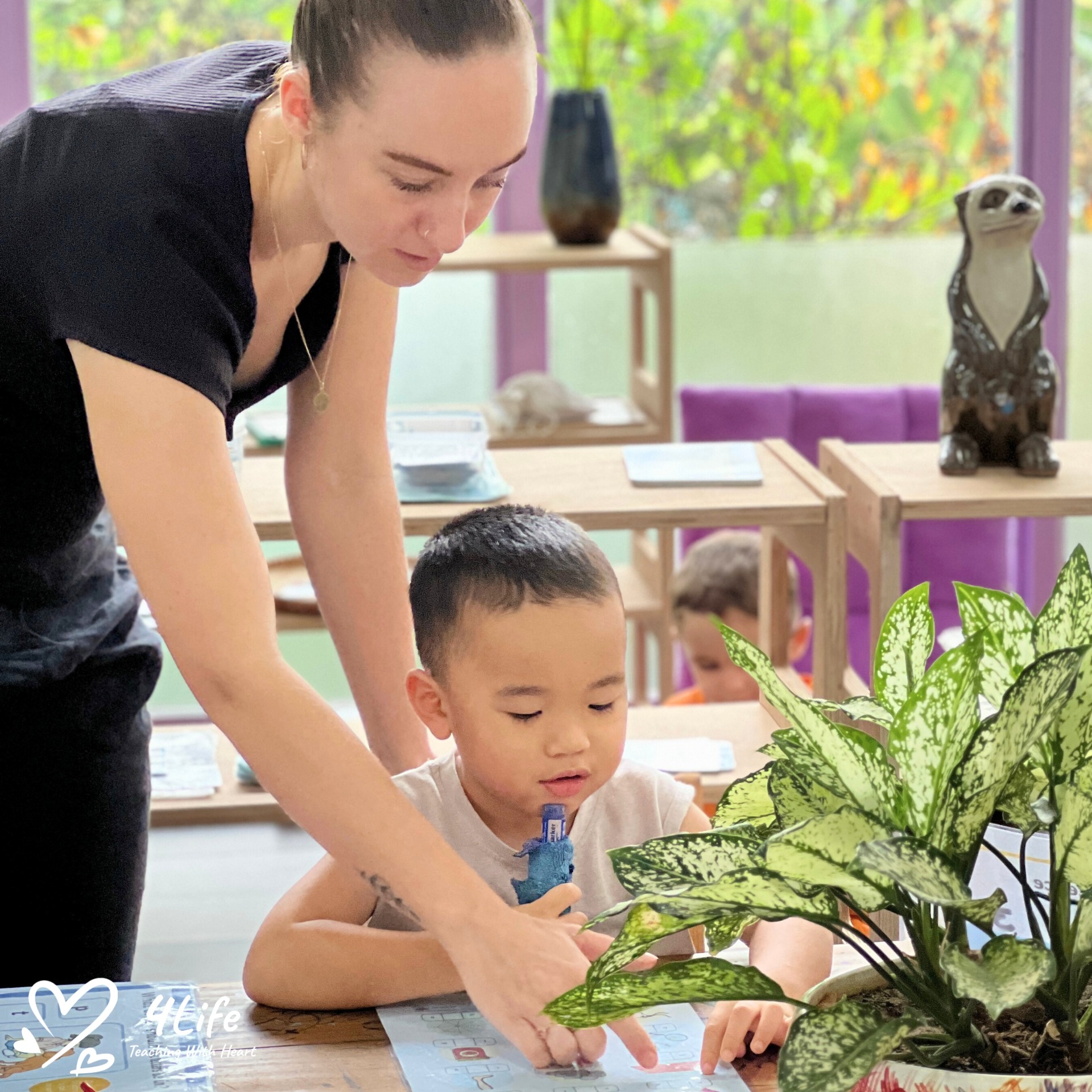
If the environment is the “second teacher,” then adults – parents and teachers – serve as “subtle guides,” creating the environment and connecting children to it.
Children absorb not only what adults say but also their attitudes, emotions, and behaviors. Calmness, patience, respect, and affection become invisible role models that children internalize every day. Adults need to step back to provide opportunities for independence while remaining ready to observe, guide, and support when necessary.
Importantly, this role is not that of a traditional “teacher” who imposes knowledge. Instead, adults protect the child’s focus, respect individual developmental rhythms, and nurture the child’s belief that they are the authors of their own personality and learning.
Practical Implementation at 4Life Education
At 4Life Education, nurturing the absorbent mind in children aged 0–6 is approached systematically and consistently, based on Maria Montessori’s philosophy. The school regards the learning environment as the “silent teacher” and teachers and parents as “subtle guides.”
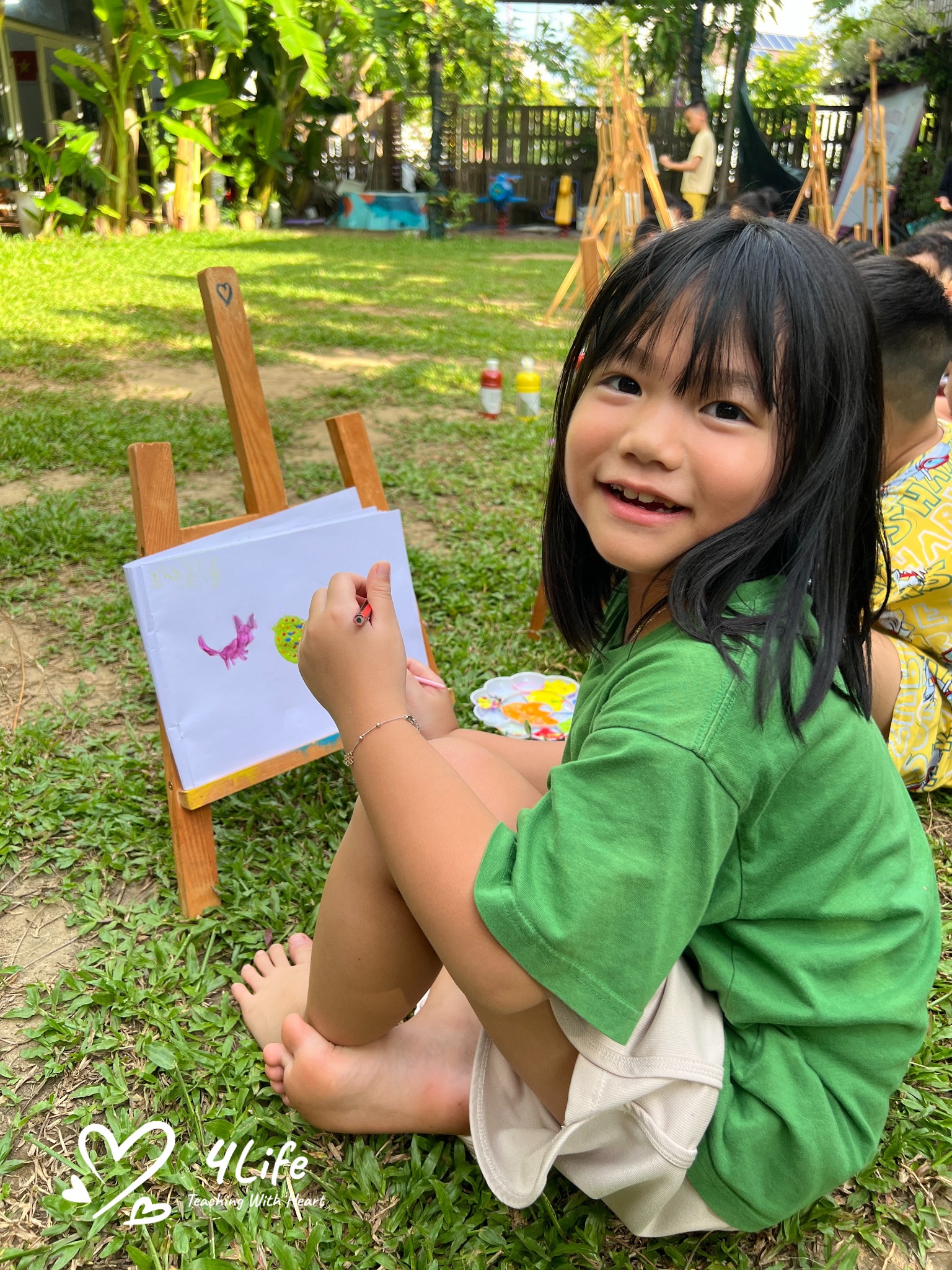
– Carefully prepared environment: Classrooms are open, filled with natural light, greenery, minimalist and harmonious décor, safe and inviting, close to nature. Learning areas are clearly defined, and a wide range of Montessori materials is thoughtfully arranged according to developmental stages, allowing children to explore freely and independently.

Practical Implementation at 4Life Education
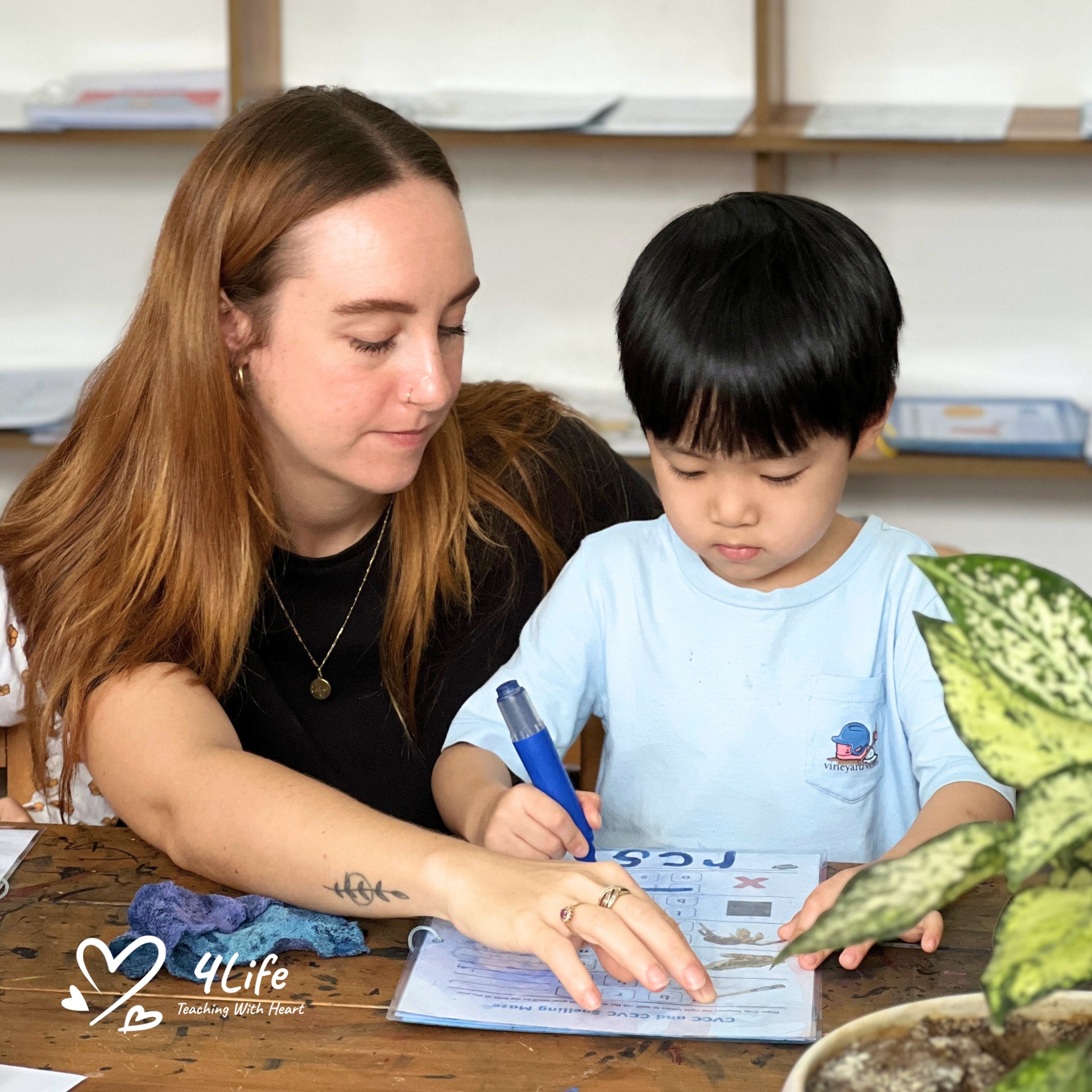
– Adults as guides and facilitators: Teachers at 4Life Education are trained to observe, listen, and create opportunities for self-directed learning rather than imposing instruction. They design the environment and act as a bridge, helping children interact meaningfully with it. Parents are engaged through workshops and guided home practices, ensuring a consistent approach to nurturing the absorbent mind.
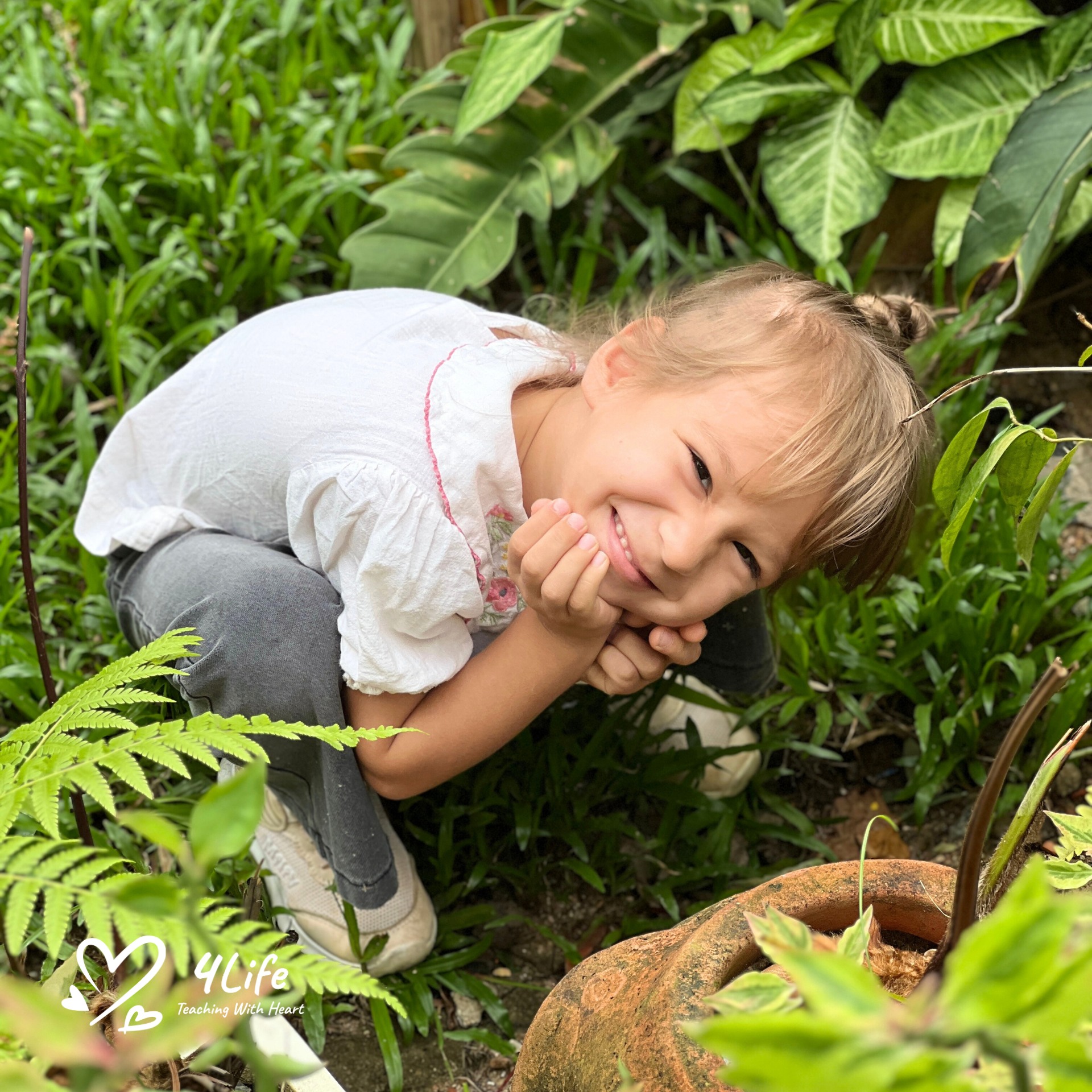
– Natural, guided learning experiences: Each day is a journey of free yet structured exploration. Children experience uninterrupted learning cycles through individual and small-group activities, developing focus, independence, social skills, and positive communication traits.
This approach demonstrates Montessori’s principle that a prepared environment combined with thoughtful adult guidance acts as a “dual lever” for maximizing the absorbent mind during the critical 0–6 years.
The absorbent mind forms the foundation for lifelong learning and personal development. A well-prepared environment and subtle adult guidance are the keys to nurturing this potential. Every action and arrangement becomes a seed planted in the child’s soul, helping them grow into independent, compassionate, and creative individuals – true to Montessori’s vision and supported by contemporary educational research.


0 Comments