
Freedom helps children develop discipline naturally when they have the opportunity to make choices, concentrate, and experience things on their own in an appropriate environment. In Montessori, freedom does not mean allowing children to do whatever they want without limits. Children are allowed to choose activities, repeat work they are interested in, and gradually recognize the necessary principles throughout the process. Through concentrating on a task, children learn to control their actions, respect the environment, and adjust their behavior without adults constantly reminding them. When discipline comes from within, children do not do the right thing simply because they are afraid of punishment or want to be praised, but gradually understand why they need to do so. Explore this topic with lamchame.blog in this article to better understand the relationship between freedom and discipline in children.
How are freedom and discipline connected?
Many people often think that in order for children to be disciplined, it is necessary to set many rules and require children to follow them seriously. However, discipline can be developed in another way when children have the opportunity to experience things on their own. When allowed to choose suitable activities, children have more motivation to participate and maintain their attention for longer. Repeating a task helps children better understand how to do it, recognize the sequence, and gradually control their own actions. From there, principles are no longer simply requirements from adults but become something children can recognize on their own.
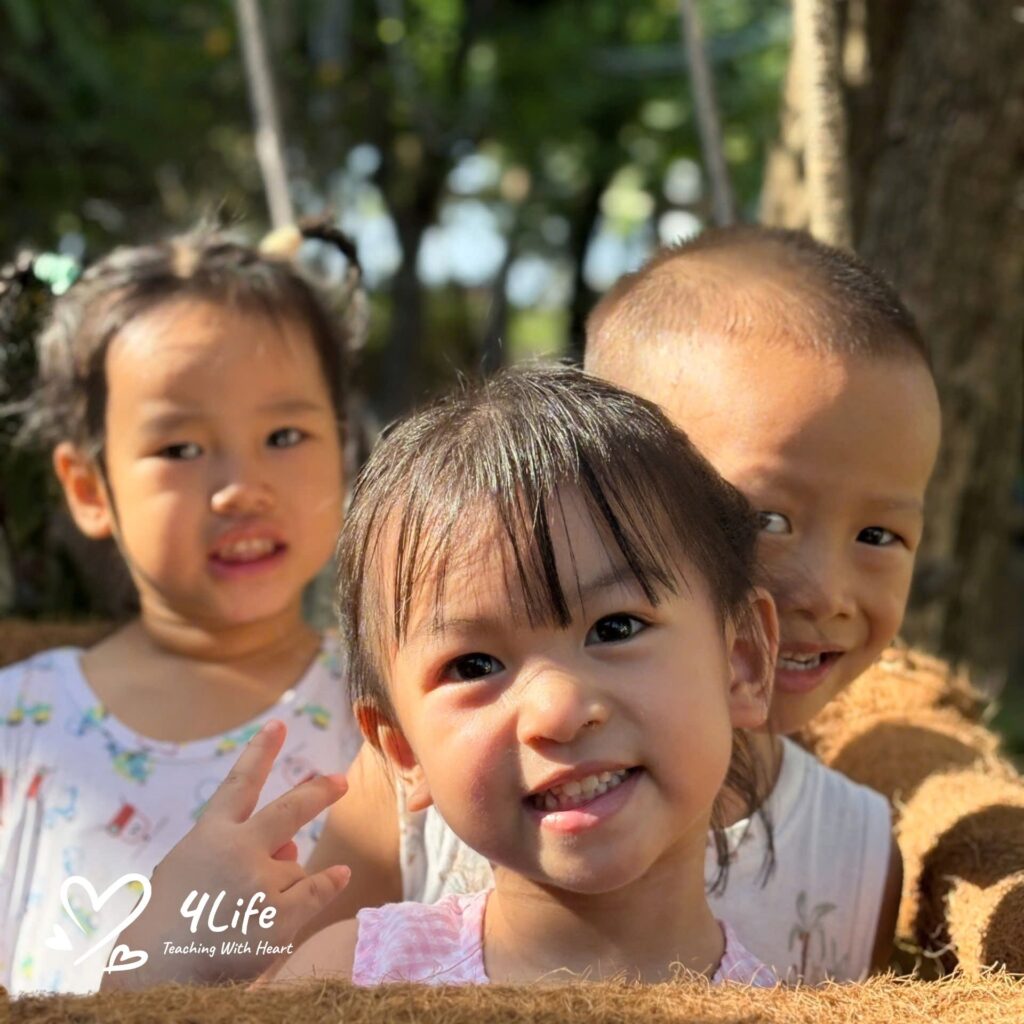
Freedom helps children develop discipline because freedom creates opportunities for children to practice their ability to make decisions. When children are allowed to make choices within appropriate limits, they begin to learn how to consider, act, and take responsibility for their choices. If adults always make decisions for them, children may become accustomed to waiting for instructions. On the other hand, when they have space to do things on their own, they gradually understand that every choice comes with a certain responsibility. This is an important foundation for developing inner discipline.
Why does choice help children develop self-discipline?
When allowed to choose an activity that matches their interests, children often have greater motivation to participate actively. Children can decide what they want to do, which materials to use, and how much time to spend completing the task within the permitted limits. This initiative helps children become less dependent on adults constantly telling them what to do. They begin to recognize their own needs and learn how to make decisions.
The process of making choices also creates many opportunities for children to practice self-discipline. After completing an activity, children can learn to put materials away, organize the space, or move on to another task. These small actions, repeated regularly, help children develop habits without adults having to remind them again and again. When children start and complete a task on their own, self-discipline gradually becomes an internal ability rather than simply a response to external demands.
Concentration is the bridge between freedom and discipline
Freedom of choice creates conditions for children to find activities that suit their developmental needs. When an activity is engaging enough and appropriate for their abilities, children can spend more time doing, repeating, and improving it. During this process, their ability to concentrate is strengthened. Children learn to maintain their attention on one task instead of constantly moving from one activity to another according to adult direction.
Concentration is closely connected to the ability to self-control. When children are focused on a task, they need to control their movements, know how to wait, follow each step, and deal with difficulties that arise. Through repeated practice, children gradually become better able to adjust their behavior. Therefore, discipline does not necessarily begin with a command. It can begin from the moment children voluntarily concentrate on a task and try to complete it.
How is inner discipline different from making children obey?
A child who sits still because they are afraid of being reminded does not necessarily have the ability to self-control. If the adult leaves, the child’s behavior may change because the reason for their obedience has also disappeared. This is an expression of external control. The child follows a request because someone is supervising them, because they are afraid of the consequences, or because they want to avoid being reprimanded.
Inner discipline, on the other hand, develops when children understand the principles and are able to adjust themselves even when there is no adult nearby. Children know not to take other people’s belongings because they understand that these are personal items, know not to interfere with other people’s work, and know to put things away after using them because they understand their responsibility. When behavior is adjusted based on understanding rather than fear, discipline becomes a part of the child from within. This is why freedom with limits plays an important role in developing discipline.
Freedom always needs to come with limits
Freedom in education does not mean that children can do whatever they want. A suitable environment needs clear limits to protect everyone’s rights. Children can choose the activity they want to do but cannot destroy someone else’s work. They can use materials but need to take care of them and return them to the proper place. They can express their emotions but cannot use behavior that hurts others.
These limits help children understand that their freedom is not separate from responsibility. When children cross a limit, adults can calmly restate the principle and guide them toward appropriate behavior. Consistency is very important because children need time to understand and remember the rules in the environment. When limits are maintained consistently without threats, children have more opportunities to accept the principles and gradually adjust their behavior on their own.
Work helps children practice discipline every day
Discipline can be developed through very ordinary activities in daily life. When children take an item themselves, carry out an activity, finish it, and put it back in the right place, they are practicing sequence and responsibility. When children need to wait their turn or remain quiet so that others can concentrate, they are learning how to control their actions. Experiences like these create practical opportunities for children to develop the ability to self-regulate.
Repeating work is also very important. An action performed many times helps children become increasingly skilled and better understand the related rules. Children do not need to learn discipline through lengthy explanations if they have opportunities to experience it directly. When the work is appropriate for their abilities and they carry it out in a stable environment, concentration, perseverance, and self-control can develop together.
How should parents give children freedom?
Parents can start by giving children small choices that are appropriate for their age. For example, children can choose their clothes, choose an activity they want to do, or decide the order of some familiar tasks. These choices do not need to be too many but should be enough for children to feel that they have a role in things related to themselves. When children make a choice, parents can observe and allow them to do it themselves instead of quickly doing it for them.
Along with the right to choose, parents also need to establish clear limits. Children can choose a toy, but after playing, they need to put it away. They can choose an activity but should not affect others. They can do a task on their own but need to use the materials properly. When freedom and limits are placed together, children gradually understand that freedom is not simply doing whatever they want, but the ability to make choices and take responsibility for those choices.
Do not turn freedom into neglect
Giving children freedom does not mean that adults withdraw from their development. Parents still need to observe, prepare the environment, teach necessary skills, and intervene when behavior is dangerous or affects others. The difference lies in the fact that adults do not control every action of the child. When children are capable of doing something themselves, adults can step back and allow them to try.
If children encounter difficulties, support should also be just enough to allow them to remain involved. Doing the entire task for them may cause children to lose opportunities to practice, while providing no support when they truly need it may make them easily discouraged. Observation helps parents recognize the appropriate time to provide guidance or step back. Through this, children experience the feeling of solving problems on their own and gradually become more confident in their own abilities.
When children self-regulate their behavior
One of the notable signs of inner discipline is when children can regulate themselves without adults constantly reminding them. Children know that they need to put things away after using them, know how to wait their turn, know how to remain quiet when others are working, or stop an inappropriate action on their own. These behaviors may begin with external rules but gradually become an internal understanding.
This process does not happen immediately. Children need many experiences, repeated reminders of principles, and opportunities to correct their behavior. Adults also need to be patient because the ability to self-control develops in stages. When children are given the right to choose within an appropriate range and are guided consistently, they have more conditions to move from “doing because they are asked” to “knowing what they should do on their own.”
Freedom helps children develop responsibility
When children are allowed to make their own decisions, they also have opportunities to recognize the results of their choices. If children take an item and know to put it back after using it, they are learning to take responsibility for the materials. If they choose an activity and want to continue doing it, they need to take care of the space so that they can complete it. These connections between choice and responsibility help children better understand their role in the environment.
Responsibility does not need to be taught through heavy reminders. It can be built through small things that are repeated every day. When children have opportunities to do things themselves and see the results of their actions, they gradually understand that choices always come with responsibility. This is also why freedom helps children develop discipline in a more sustainable way: children not only know what needs to be done but also understand why they need to do it.
How can the balance between freedom and discipline be maintained?
Balance begins with identifying the things children have the right to choose and the limits that cannot be ignored. Parents do not need to control every action, but they should not allow every behavior to be accepted either. Some basic principles, such as respecting others, taking care of materials, and ensuring safety, can be maintained consistently. Within these boundaries, children can have many choices that are appropriate for their abilities.
When children understand the limits, parents can gradually expand their autonomy. Tasks that children have mastered can be given to them to do more independently. New choices can be introduced when children are capable of taking responsibility. In this way, freedom expands alongside maturity. This is a process that takes time, but every experience of independence contributes to helping children develop decision-making and self-control.
Freedom helps children develop discipline when that freedom is placed in a suitable environment and accompanied by clear limits. When given choices, children have the opportunity to find suitable activities, maintain concentration, repeat tasks, and gradually understand the necessary principles. From there, children can develop the ability to self-regulate instead of simply acting under adult control. Discipline therefore does not necessarily begin with commands or punishment. Discipline can be developed from small choices, everyday tasks, and the process of experiencing the results of their own actions. When freedom is given in the right way, children have a stronger foundation to become proactive, responsible, and capable of controlling themselves.