
Developing self-discipline in children should not begin with constantly reminding, controlling, or requiring children to do everything adults want them to do. Self-discipline is gradually formed when children have opportunities to make their own choices, experience things for themselves, focus on what interests them, and learn to take responsibility for their actions. As they grow, children need to be given appropriate autonomy according to their abilities instead of always having someone do things for them or make decisions for them.
A respectful and orderly environment with clear boundaries will help children naturally learn to regulate their behavior. When parents understand their child’s developmental needs correctly, they can accompany them more gently and create a foundation for long-term independence. Join 4life.edu.vn in this article to discover how to develop self-discipline in children effectively in everyday life.
How is self-discipline formed in children?
Self-discipline is the ability of children to voluntarily carry out a task without needing adults to constantly remind or control them. For young children, this ability does not appear from the beginning but is developed through a process of experience, repetition, and maturation. When children have opportunities to do things appropriate for their age, they gradually realize that they are capable of solving many problems in life.
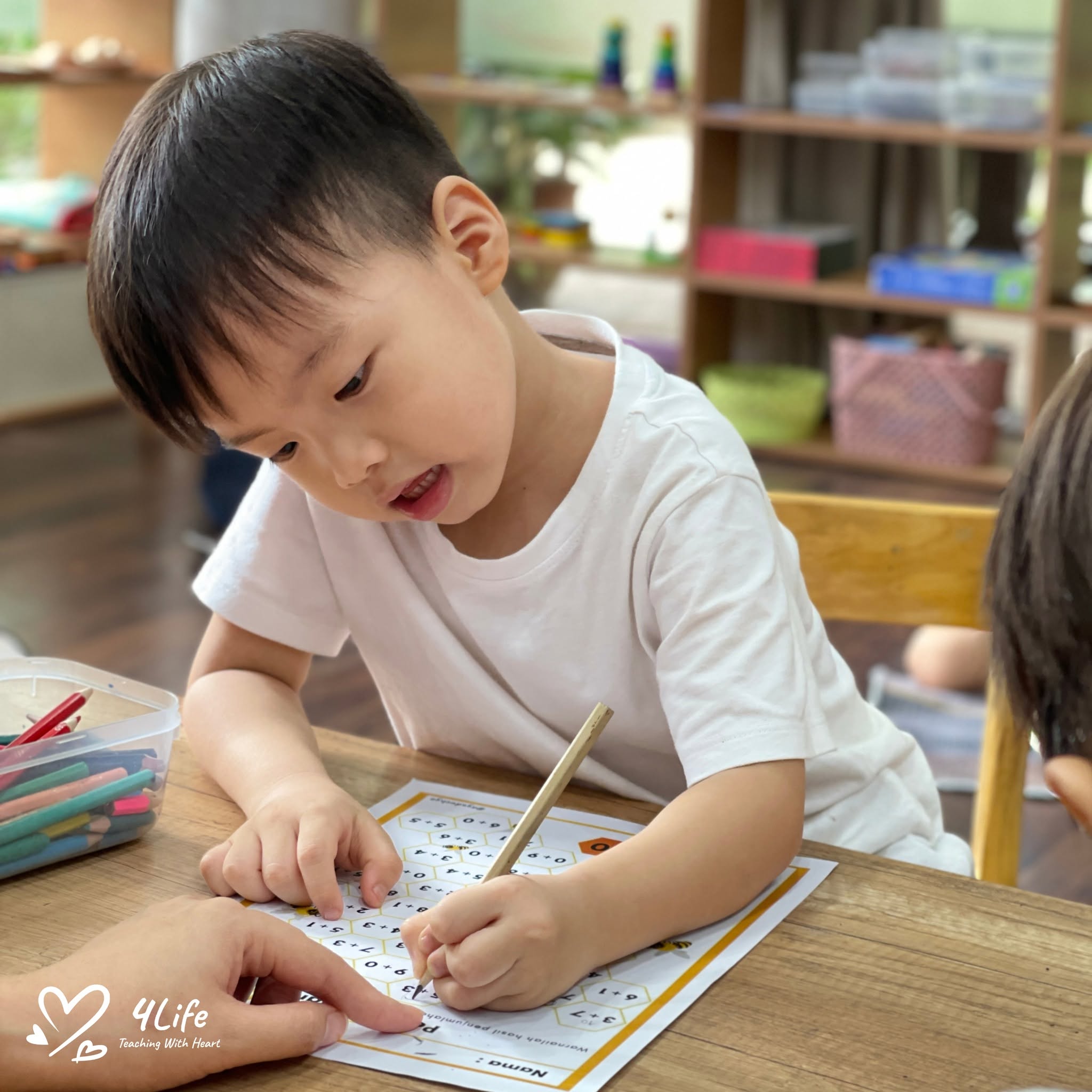
What is important is that parents should not only look at the final result. A child who takes a long time to get dressed but persists in doing it independently is still learning self-control. A baby who puts away toys after playing is beginning to understand responsibility. Small actions like these, when repeated regularly, will become habits and contribute to developing self-discipline in children from within.
Give children opportunities to make their own choices
Children often tend to be more positive when they are allowed to participate in decisions related to themselves. Therefore, instead of making all the decisions, parents can offer several appropriate choices. For example, children can choose the shirt they want to wear from two prepared options or choose the activity they want to do first.
Making choices not only gives children a sense of being respected but also helps them learn to take responsibility for their decisions. When children choose an activity themselves, they will have more motivation to participate and complete it. Through many experiences, children gradually learn to consider, understand what is appropriate, and become more proactive in life. This is an important foundation for developing self-discipline in children without relying too much on commands.
Freedom does not mean children can do whatever they want
Giving children the power to choose does not mean removing all boundaries. Children still need clear principles to feel safe and understand how to behave appropriately toward themselves and others. Freedom has the greatest value when it is placed within an environment with reasonable boundaries.
Parents can allow children to choose their games while still agreeing that toys need to be put away after playing. Children can choose activities but should not disturb others who are concentrating. Simple and consistent boundaries will help children understand that freedom always comes with responsibility. When practiced regularly, children will gradually learn to regulate themselves instead of simply following instructions because they are afraid of being reminded.
A suitable environment encourages children to take initiative
The living environment has a direct influence on children’s ability to become independent. If everything is placed too high, too far away, or adults always do things for them, children will have fewer opportunities to carry out tasks independently. In contrast, a properly prepared space will encourage children to be more proactive.

Parents can place books, clothes, toys, or safe personal items in places that children can easily reach. Each item should have a relatively fixed place so that children know where to take it and where to put it back. When the environment is orderly, children will not only find daily activities more convenient but will also gradually develop an awareness of sequence, responsibility, and tidiness.
Do not be too quick to help when children have difficulties
When adults see children struggling with a task, they often want to help immediately. This comes from love and the desire to prevent their children from experiencing difficulties. However, if every obstacle is solved for them, children will lose the opportunity to discover their own abilities.
Instead of immediately doing the task for them, parents can observe and wait for children to try a little longer. If necessary, give a short hint so that they can continue. When children complete something that seemed difficult on their own, they will experience a sense of their own ability. This feeling of success creates motivation for children to continue trying and become more proactive in future situations.
Concentration helps children build self-discipline
A child who wants to complete a task needs the ability to maintain attention. Therefore, developing self-discipline in children is also connected to protecting their periods of concentration. When children are deeply engaged in an appropriate activity, parents should not constantly call, ask questions, or redirect them to another task unless it is truly necessary.
When given enough time to concentrate, children have opportunities to observe, experiment, recognize mistakes, and find their own solutions. This process helps children develop persistence and control over their actions. Over time, children will understand that a task needs to be started, carried out, and completed instead of being constantly abandoned because of external distractions.
Let children do things appropriate to their abilities
Self-discipline is not only formed through learning but also begins with very familiar everyday activities. Children can put on their own shoes, put away clothes, prepare some personal belongings, clean up their play area, or help arrange simple objects.

What is important is that the task needs to be appropriate for the child’s age and actual ability. If the task is too difficult, children can easily become frustrated; if everything is too easy or adults do everything for them, children will lack opportunities to develop. When given manageable tasks, children can gradually build proactive habits and feel that they are responsible members of family life.
Guide through actions instead of just reminding
A reminder can help children remember something at a particular moment, but real experience helps them understand how to do it. If parents want their children to know how to put things away, they can practice together several times. If they want their children to know how to take care of their space, they can show them how to organize it and let them do it themselves.
Once children know how to do something, adults should gradually reduce their support. This helps children move from a state of needing guidance to taking action independently. Habits formed through practice are often more lasting than simply hearing the same reminders repeated every day.
Let children learn from the results of their actions
Children will understand responsibility more deeply when they can see the connection between actions and results. If a child spills water, they can clean it up together with an adult. If they take out too many toys, they can put them away themselves after finishing. These simple experiences help children understand that every action has a corresponding result.
This is different from using punishment to make children afraid of making mistakes. When children participate in fixing a problem, they have an opportunity to think and find ways to improve. Over time, children will gradually become more proactive in considering their actions before acting. This ability to recognize and regulate themselves is an important part of self-discipline.
Respect children’s emotions and abilities
Respecting children does not mean agreeing with every behavior. Adults still need to set boundaries, but they can do so with a calm and consistent attitude. When children make mistakes, instead of labeling them with negative comments, parents should focus on the specific behavior and guide them on how to correct it.

Every child develops at a different pace. Some children quickly learn to dress themselves, while others need more time. Some children can easily maintain concentration, while others need a quieter environment. When appropriately respected, children will feel safe enough to try, make mistakes, and continue learning. This is a necessary foundation for developing self-discipline in children in a sustainable way.
Limit control and constant reminders
If parents always tell children what to do, when to do it, and how to do it, children may develop a habit of waiting for instructions. When adults do not remind them, children may not know where to begin on their own. Therefore, sometimes reducing reminders is precisely a way to create opportunities for children to take responsibility themselves.
Instead of constantly saying, “Put your things away,” parents can agree on a simple rule that after playing, belongings will be returned to their original places. Then, observe and give children time to do it themselves. If children forget, a short reminder is enough. As children gradually develop the habit, adult intervention can be reduced.
Be patient during the process of building habits
Self-discipline is an ability that takes time to develop. Children may do something well today but forget it tomorrow. This can completely happen during the process of growing up. Parents should not assume that their children lack self-discipline just because they have failed to do something a few times.
What matters is maintaining a consistent environment, boundaries, and approach to guidance. When children repeat an action enough times, it will become familiar and require less support. Adults’ patience gives children enough time to turn everyday experiences into genuine self-control.
Self-discipline starts with very small things
Parents do not need to wait until children start school to begin developing self-discipline in children. The first habits can be formed right in everyday activities. Putting away an item they have just used, putting on their own shoes, getting a book, completing an activity, or helping clean up after playing are all small but meaningful steps.

When children are given opportunities to carry out appropriate tasks, they gradually realize that they are capable of doing many things that previously required adult assistance. From this confidence, children will become more proactive and less dependent. Self-discipline, therefore, is not a quality created through pressure, but the result of a process of consistent and respectful nurturing.
Developing self-discipline in children is a journey that requires patience, trust, and the right kind of support from parents. Instead of controlling every action, adults can give children appropriate choices, create an orderly environment, give them opportunities to do things independently, and encourage children to take responsibility for the things they do. When given freedom within clear boundaries, children will gradually learn to concentrate, regulate themselves, and proactively solve problems. Developing self-discipline in children does not need to begin with grand demands, but can be nurtured through small things repeated every day, allowing children to gradually grow with confidence and the ability to take control of themselves.