
Raising independent children according to Montessori is not simply about teaching children to eat by themselves, dress themselves, or complete certain daily tasks on their own. More importantly, it is about gradually helping children develop the ability to master themselves from within. In the Montessori spirit, when given freedom in a suitable environment, children have the opportunity to choose what they are interested in, repeat activities, develop concentration, and gradually recognize the rules of life. From there, children develop order, learn to regulate their behavior, and voluntarily follow necessary rules. Discipline therefore does not come from coercion or fear but is built on a foundation of freedom and respect. Join 4Life Education to learn more about how to raise independent children according to Montessori so that parents can accompany their children in the right way, starting with the smallest things.
Freedom is the foundation of independence
In Montessori, freedom plays an important role in the child’s development. When children are free to choose the things they are interested in, they tend to repeat those activities many times. Repetition helps children become increasingly attentive, understand the activity more clearly, and gradually recognize the rules of things. This is not freedom without limits, but an opportunity for children to act, explore, and develop their inherent potential.

When children have the opportunity to choose and experience things for themselves, they also begin to learn how to master their own actions. Children no longer act only because adults ask them to but gradually develop the desire to do something on their own. This process creates the foundation for initiative and self-control. Therefore, raising independent children according to Montessori needs to begin by creating a space that is safe enough for children to explore and structured enough for them to learn to respect others.
Discipline is formed from within
Discipline in Montessori is not the same as the common understanding of keeping children sitting still, listening to the teacher, or always following adults’ instructions. True discipline is understood as the ability of a person to master themselves and voluntarily follow the necessary standards in life. When there are no adults nearby but children still know how to regulate their behavior, this is a true expression of self-control.
A child who does the right thing only because they are afraid of being scolded or punished may stop the behavior at that moment, but this does not mean that the child has developed inner discipline. Montessori emphasizes that discipline needs to be built on the foundation of freedom. When children are allowed to experience, understand rules, and gradually recognize what is appropriate, they can voluntarily follow them. This is an important point for parents to remember when raising independent children according to Montessori.
Give children opportunities to make choices
When adults make most decisions for children, children can easily develop a habit of waiting. Children may become accustomed to teachers or parents assigning tasks, arranging activities, and providing answers. When given freedom, these children may sometimes not know where to begin. This shows that initiative cannot develop if children do not have opportunities to make their own choices and experience things for themselves in life.

Parents can begin with small choices that are appropriate for the child’s abilities. Instead of deciding everything, give children opportunities to choose activities, choose how to carry them out, or decide the order of some simple tasks themselves. When given choices, children can recognize what interests them, spend time concentrating, and repeat activities. Through each experience, children gradually understand their own abilities and become more proactive.
Do not do things for children when they are trying
One of the things that can easily hinder children’s independence is adults helping too quickly. When seeing children struggle, parents often tend to do things for them so that the task can be completed faster or to prevent children from making mistakes. However, if someone solves the problem for children every time they encounter difficulties, children will have fewer opportunities to experience the process of thinking, experimenting, and finding ways to solve problems.
In raising independent children according to Montessori, adults need to know how to observe and choose the right time to provide support. When children can still continue trying, give them more time. If necessary, parents can provide just enough guidance instead of directly doing the entire task for them. When children solve a problem by themselves, the feeling of success will help them trust their own abilities more. From there, children gain more motivation to continue overcoming new challenges on their own.
Create an environment that encourages children to be active
The environment has a direct influence on how children act. An environment with too many restrictions can make children hesitant, afraid of making mistakes, and unwilling to explore. When every action is stopped, psychological barriers may gradually develop. Children no longer act out of natural curiosity but constantly wait to see whether adults allow them to do something.
In contrast, a suitable environment creates conditions for children to be active and discover what interests them. Children can move, observe, choose, and repeat tasks according to their developmental needs. In the process, children gradually find their own sense of order. Therefore, parents not only need to teach children how to do things but also need to consider whether the surrounding environment truly creates conditions for children to be raised independently according to Montessori.
Help children understand necessary limits
Freedom does not mean that children can do anything without considering others. In a Montessori environment, there are still clear limits to protect everyone’s rights. Behaviors that disturb others, cause damage, hit people, insult others, or take other people’s belongings are not accepted. The important thing is that these limits are established on the basis of respect and reminders rather than punishment.

When a child disturbs another person who is concentrating, adults can guide the child toward another activity and patiently repeat this way of handling the situation. Through experience, children gradually realize that they should not disturb others. Rules are formed through practical actions rather than words alone. When children understand limits and gradually regulate their own behavior, discipline begins to emerge from within.
Concentration helps children develop self-control
Concentration is an important part of the process of developing discipline. When children find an activity they enjoy and have enough time to carry it out, they can devote their attention to the task for longer. During this process, children not only develop their ability to concentrate but also gradually become more orderly in their thoughts and actions.
The more opportunities children have to concentrate on their work, the more their ability to control themselves is strengthened. When facing a problem, children can observe, think, and find ways to solve it instead of immediately waiting for adults. Therefore, parents should not constantly interrupt children when they are deeply engaged in a suitable activity. In raising independent children according to Montessori, protecting children’s concentration is also creating conditions for them to develop independence.
Be patient as children become familiar with freedom
A child who has previously been accustomed to control may not know how to use freedom right from the beginning. When moving into an environment with less pressure, children may run around, become disorderly, or not know which activity to choose. This is a reaction that may occur during the adaptation period. Adults should not quickly conclude that children lack independence simply because they cannot demonstrate it immediately.
When freedom is maintained in an environment with limits, children will gradually find activities that are suitable for them. Children begin to choose, repeat, concentrate, and solve difficulties during their work. From there, order gradually appears. This process requires time and patience from adults. The more parents understand this, the more natural and appropriate raising independent children according to Montessori becomes for their children’s natural developmental needs.
Respect children’s emotions and abilities
Respecting children does not mean agreeing with every behavior they display. Respect means recognizing children as individuals who are developing, with their own needs, abilities, and processes. When children make mistakes or perform an inappropriate action, adults can guide them instead of immediately scolding or punishing them. A consistent response helps children understand limits without having to live with fear.
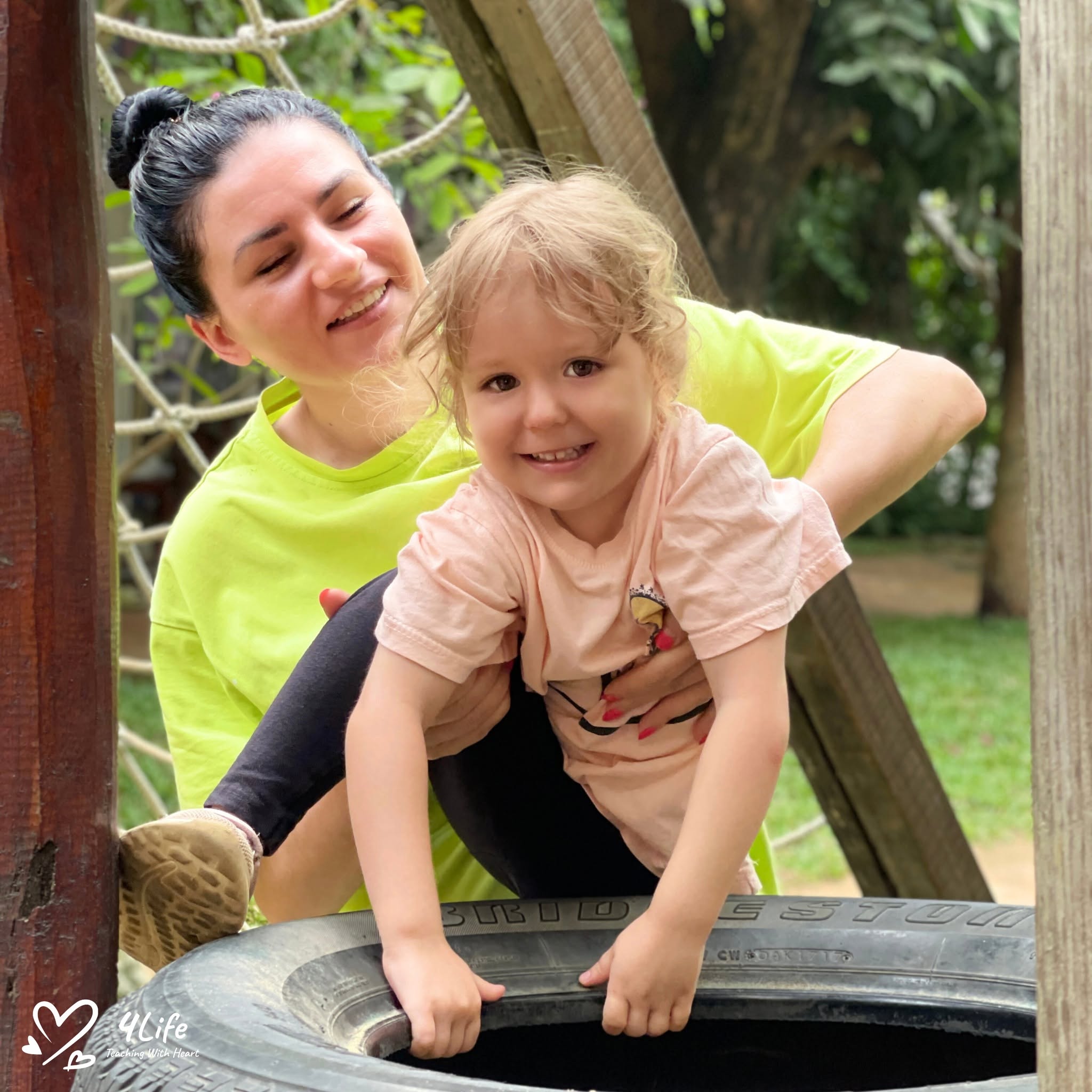
Respect also helps children develop self-esteem. When children feel that they are trusted and have opportunities to do things by themselves, they will be motivated to explore their own abilities. A child who gradually learns to care for themselves, work independently, and control their behavior will feel more confident when facing challenges. This is an important foundation of raising independent children according to Montessori, because the goal is not only to create a child who knows how to do things but also to help them develop their character.
Rules should be few but clear
Children are capable of following rules when those rules are appropriate for life and do not conflict with their inner needs. In games, children can often create their own rules and take them very seriously. This shows that children do not always resist discipline. The issue lies in how rules are formed and how adults introduce rules into children’s lives.
Therefore, instead of setting too many requirements, parents should focus on a few principles that are truly necessary. Rules should be clear, reasonable, and maintained consistently. When children understand the meaning of the rules and experience them regularly, they can gradually consider them a natural part of life. At this point, discipline is no longer coercion but becomes the ability to regulate one’s own behavior.
Independence develops through small things
Independence does not necessarily have to begin with major tasks. A child can start by choosing an activity independently, carrying out a task appropriate to their abilities, solving a small difficulty on their own, or recognizing that their actions are affecting others. Each experience contributes to helping children understand themselves and the environment around them more clearly.

What matters is that parents focus on the process rather than only paying attention to the final result. A child may not be able to do something today, try again tomorrow, and only complete it a few days later. This repetition is part of the developmental process. When children have opportunities to experience something on their own many times, they gradually become more skilled, focused, and confident. The very small things they do today can become the foundation for independence in the future.
Raising independent children according to Montessori does not mean letting children do whatever they want or requiring them to do everything independently right away. The core lies in creating an environment with freedom, limits, respect, and enough time for children to experience things on their own. When given the opportunity to choose what they are interested in, children can repeat activities, develop concentration, recognize rules, and gradually develop the ability to control themselves. Discipline therefore does not need to begin with fear or constant reminders but can develop through children’s own activities and experiences. Parents should patiently observe, limit doing things for their children, establish necessary rules, and trust in their children’s ability to develop. This is the foundation for raising independent children according to Montessori in a natural, positive, and sustainable way.